
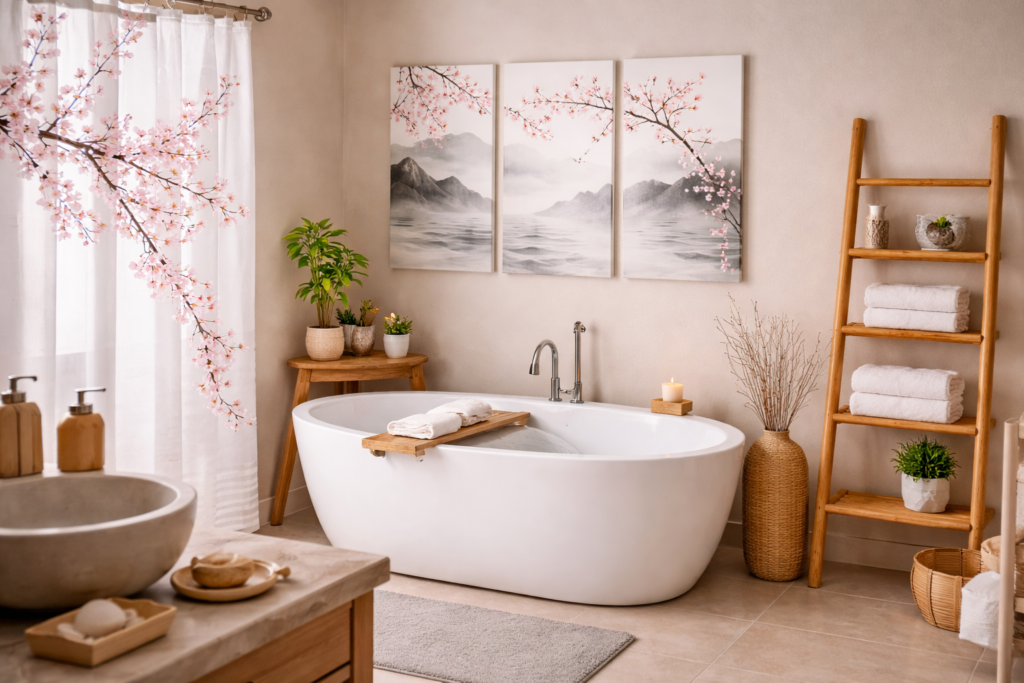
Asian bathroom accessories turn an ordinary space into something that feels deliberate and calm. The right combination of ceramic pieces, wall decor, textiles, and natural materials creates a room that reflects traditional design principles from Japan, China, and Southeast Asia. This guide covers the specific items and placement strategies that make an asian bathroom feel cohesive rather than cluttered.
One mistake I see repeatedly is people buying a matching set and expecting it to look “zen.” Real asian-inspired design is about restraint, texture contrast, and intentional negative space.
Ceramic Pieces That Anchor the Space
Ceramic soap dishes, trays, and vases set the visual foundation. Matte-finished stoneware in earth tones or celadon green reads more authentically than glossy white porcelain, though a simple white space can work with either.
Skip the matching bathroom decor set. One handmade ceramic piece next to a wooden soap tray creates more visual interest than five items from the same collection. Look for pieces with slight irregularities. In Japanese aesthetics, the concept of wabi-sabi values imperfection over mass-produced uniformity.
Soap dispensers in stoneware or bamboo housing blend with an oriental theme far better than plastic pump bottles.
Wall Decor for an Asian Bathroom
Wall art determines whether your room decor feels authentic or like a costume. Start with one focal piece, not a gallery wall.
Japanese bathroom wall art featuring a crane, pine branch, or ink wash landscape works well above a bathtub. A wall art set of 2 or wall art set of 3 arranged vertically creates symmetry on narrow walls. Canvas wall art with a japanese ocean wave or botanical wall art in muted tones suits modern homes.
Metal wall art featuring a lotus flower or koi fish adds dimension. Metal wall decor pairs especially well with black fixtures in contemporary spaces. For a subtler approach, a single poster of a cherry blossom branch acts as a quiet anchor point.
Avoid pictures wall decor that tries too hard. One piece of japanese art with proper framing outperforms five cheap prints every time.
Shower Curtain and Bath Curtain Options
A cherry blossom shower curtain is the most popular choice for asian-inspired bathrooms, and for good reason. The pattern adds softness without dominating a small space.
If cherry blossoms feel too expected, look for a shower curtain set with a subtle ink wash pattern or bamboo motif. A textured curtain in natural linen tones works for homeowners who want the aesthetic without any printed imagery. Pair a curtain with a matching bath mat for a set with shower curtain coordination that feels intentional.
Heavy patterns overwhelm small spaces. In a remodeled room, simplicity wins.
Zen Bathroom vs. Spa Bathroom
These two styles overlap but are not identical. A zen bathroom emphasizes restraint, clean lines, and asian zen balance. Think japanese style simplicity with one piece of wall art decor and open counter space.
A spa bathroom focuses on comfort. Layered towels near the bathtub, soft lighting, a hinoki wood tray holding candles, and bath accessories arranged for accessibility. The mood is warmth rather than minimalism.
Mixing zen decor with busy chinoiserie prints creates visual conflict. Pick one direction and commit. If you want both moods, dedicate different areas of the room to each, but keep the palette unified.
Japandi: Where Japanese Decor Meets Scandinavian Simplicity
Japandi blends japanese decoration with Scandinavian functionality. Light wood tones, simple porcelain bath accessories, and minimal art decor define the look.
In a japandi-influenced japanese bathroom, you won’t see clutter. Home decoration serves a function or it doesn’t stay. Choose one or two asian art pieces. Negative space is part of the interior design, not a gap to fill.
This style works particularly well for people who like the idea of an asian toilet setup with integrated fixtures that keep surfaces clear.
Japanese Wall Decor Without Overdoing It
Japanese wall decorations work best with restraint. A japanese crane painting, a japanese koi watercolor, or a japanese landscape in ink wash painting style can serve as the room’s single focal point.
Metal wall art with a lotus motif or torii gate silhouette adds dimension without color overload. If your home decor leans contemporary, choose abstract japanese art over literal scenic prints.
Scale matters. A large single canvas print commands attention. Multiple small framed pieces scattered across the wall create noise, not calm.
Funny Bathroom Wall Art That Still Fits
Not every oriental space needs to be serious. Funny bathroom wall art can work if you keep it small and intentional.
A japanese frog illustration for a frog bathroom corner adds character. A cat in a kimono print or a samurai rubber duck poster brings humor without clashing with zen bathroom principles. The key: one novelty piece, tucked in a corner or behind a door, not center stage.
Bath Rug, Bath Mat, and Textile Choices
Textiles ground a space. A bath rug in neutral tones adds warmth underfoot. Natural fibers like cotton or bamboo feel more authentic than synthetic microfiber.
In a white room, a darker bath mat creates visual depth. If your bathroom decor bath theme includes cherry blossom elements, keep floor textiles subtle. Let the wall art decor carry the pattern work.
Towels matter too. Rolled towels in a bamboo ladder shelf or wooden tray look intentional. Towels draped over a hook look like an afterthought.
Feng Shui and Balance in the Bathroom
Feng shui principles focus on energy flow and visual balance. Uncluttered surfaces allow chi to move freely.
Place soap dispensers and bath decor items intentionally rather than scattering them across every flat surface. Symmetry near the sink or bathtub promotes calm. A vase with a single stem or a small bonsai on a shelf adds life without clutter.
Even in a style bath inspired by oriental traditions, less is more. After setting up the right paper products and functional items, resist the urge to keep adding decorative objects.
Natural Materials: Hinoki, Bamboo, and Stone
Most guides focus on prints and decor but skip materials. That is a missed opportunity. Hinoki wood, the traditional material used in Japanese soaking tubs, brings scent and warmth that wall decorations cannot replicate.
A small hinoki stool next to the bathtub, a bamboo soap tray, or river stones in a tray near the shower add sensory depth. These touches connect the space to Japanese bathing culture, where the experience goes beyond visual aesthetics into tactile and aromatic territory.
For cultural context on traditional Japanese bathing principles, see the Japan National Tourism Organization overview of bathing culture.
Bringing It All Together
Building an asian bathroom means thinking in layers:
- Start with foundational pieces in ceramic, porcelain, or wood.
- Add one controlled wall decoration, such as a wall art set or single canvas.
- Choose a bath curtain that supports the theme without dominating it.
- Anchor with textiles like a bath rug in complementary tones.
- Introduce one natural material element for sensory depth.
Whether you prefer chinoiserie patterns, minimalist japanese decoration, or a spa-inspired approach, cohesion is the goal. Every item should feel like it belongs. If a piece requires explanation, it probably doesn’t fit.
Frequently Asked Questions
What is an Asian style bathroom?
An Asian style bathroom draws on design traditions from Japan, China, and Southeast Asia. Core elements include natural materials like bamboo and hinoki wood, a muted color palette, minimal clutter, and intentional placement of each accessory. The focus is on creating a tranquil, balanced space rather than filling it with themed decorations.
What are common Japanese bathroom products?
Traditional Japanese bathroom products include hinoki wood stools and buckets, bamboo laundry baskets, ceramic soap dishes, and washcloths called tenugui. Modern Japanese bathrooms also feature TOTO washlet bidet seats, heated floors, and deep soaking tubs called ofuro.
How do you keep an Asian bathroom from looking like a theme room?
Stick to two or three authentic pieces rather than buying a complete themed set. Mix natural materials with clean-lined fixtures. Avoid anything that looks like a souvenir. Real asian-inspired design relies on restraint, quality materials, and negative space rather than accumulating decorative objects.
What makes Japanese bath accessories unique?
Japanese bath accessories prioritize function and craftsmanship over decoration. Items like hinoki stools, bamboo trays, and stoneware soap dishes are designed to age gracefully. The emphasis on natural materials, subtle textures, and purposeful simplicity sets them apart from mass-produced western bath accessories.