
Asian toilet paper differs from Western products in quality, cultural context, and how people actually use it. From ultra-soft luxury varieties wrapped in handmade washi to regions where water cleansing replaces wiping altogether, habits across the continent tell a bigger story than most visitors expect.
This guide covers what makes tissue products in countries like Indonesia and China distinct, whether you can flush safely, and why premium brands like Hanebisho charge $12 per unit.
What Makes Toilet Paper Different Across the Continent?
The product serves the same basic purpose everywhere. Soft sheets of processed pulp, wound into compact cylinders, used for personal hygiene. But availability and usage habits vary enormously by country.
In Japan, you’ll find high-quality products stocked in nearly every restroom, including public ones. Japanese manufacturers obsess over texture, ply thickness, and consistency. Walk into any supermarket in Tokyo and you’ll see dozens of brands competing on softness alone.
Parts of Southeast Asia tell a different story. In Indonesia and the Philippines, many restrooms provide a water dipper or spray hose instead. A bin sits beside the bowl for disposal when sheets are used, because older plumbing systems can’t handle flushing directly. Always check signage before you flush.
China, the country that invented disposable cleansing sheets in the 6th century, now produces billions of units annually. The United States and Europe remain the largest per-capita consumers, but demand across the continent is rising steadily.
How Toilet Paper Is Manufactured
Manufacturing starts with wood pulp or recycled fiber. Mills process raw material into a slurry, press it through screens, dry it with heat, and emboss the finished product for texture.
Premium brands use virgin wood fiber for maximum softness. Budget options rely on recycled content, which reduces deforestation impact but produces a coarser sheet. Top-tier East Asian manufacturers take a middle path: high-grade pulp processed with proprietary softening techniques that create a noticeably smoother finish.
Bamboo-based alternatives are gaining traction. Because bamboo grows to harvest size in 3 to 5 years (compared to 20+ for softwood trees), it offers genuine sustainability advantages.
Luxury Varieties: Why Pay $12 for a Single Unit?
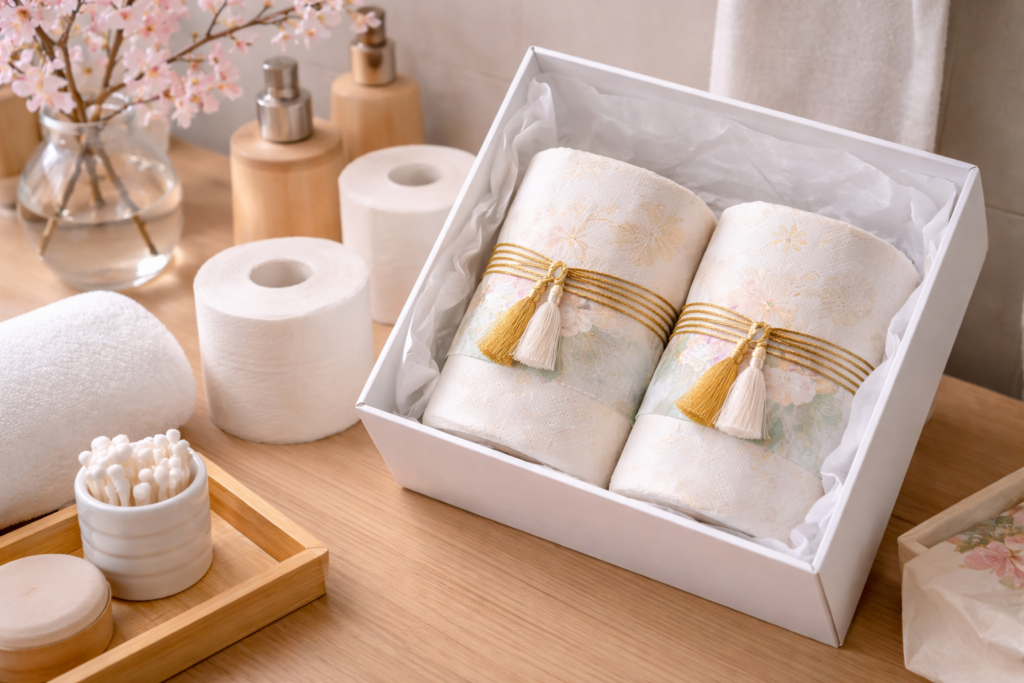
Hanebisho, the best-known luxury brand, wraps each product in handmade washi and presents them in a gift box. The imperial-style packaging targets buyers who want a premium experience or a unique gift.
What justifies the price? Three things. First, the fiber quality: Hanebisho uses high-grade virgin pulp processed to exceptional softness. Second, the craftsmanship: each piece is individually inspected. Third, the branding: these products appear in high-end department stores, not discount shelves.
Bidet Systems and Why They Change Everything
Some countries are famous for high-tech toilets with heated seats and integrated washlet systems. A washlet uses a warm water spray to cleanse before a final wipe. This cuts consumption dramatically.
Households with bidet systems use roughly 75% fewer sheets than those relying on wiping alone. The adoption of these systems has reshaped expectations around hygiene. If you’re considering one for your own home, check our guide on which TOTO washlet to buy.
For travelers unfamiliar with how to use these fixtures, the learning curve is short. Most units have clearly labeled buttons, and the comfort improvement is immediate.
Is It Safe to Flush?
This depends entirely on local plumbing infrastructure. In modern buildings across South Korea and other developed markets, flushing is standard. The sanitation systems handle it without issue.
Older buildings in parts of Southeast Asia, rural China, and some island destinations are a different matter. Narrow pipes and septic systems can’t process bulk tissue. A disposal bin beside the bowl is the norm in those locations.
Wet wipes marketed as flushable cause plumbing problems even in countries with modern infrastructure like the United States. The safest approach: follow local signage and, when in doubt, use the bin.
Cultural and Religious Practices Around Cleansing
In Muslim communities across the continent, water cleansing (istinja) is the preferred method. Disposable sheets may serve as a secondary step, but soap and water come first. These practices reflect centuries of sanitation traditions.
Hindu and Buddhist communities in South and Southeast Asia also favor water-based cleansing. The practice isn’t about avoiding disposable products; it’s about achieving a standard of cleanliness that dry wiping alone doesn’t reach.
Sustainable Alternatives Gaining Ground
Environmental concerns are pushing manufacturers toward greener production. Conventional manufacturing uses millions of trees annually for pulp processing, and the bleaching process adds chemicals to waterways.
Bamboo products lead the sustainability shift. Recycled-content options offer another path, though the texture trade-off puts off some buyers. The most sustainable option, ironically, is the bidet: reducing reliance on disposable products sidesteps the deforestation question entirely.
Storage Tips for Humid Climates
One detail most guides skip: humidity destroys product quality fast. In tropical regions, storing supplies in an unventilated cabinet leads to soggy, weak sheets that tear on contact.
Keep supplies on a dry shelf in a ventilated area. Sealed packaging helps, but once opened, moisture infiltrates within days. Buy in smaller quantities if your storage area lacks climate control.
What to Expect in a Japanese Restroom
A typical Japanese restroom features white rolls stocked consistently, a washlet with multiple spray settings, clear signage about flushing, and a sanitary presentation that reflects Japan’s broader cultural standards around hygiene.
For broader context on global sanitation standards, the World Health Organization’s sanitation overview provides useful benchmarks. For related products and fixtures, see our guide to accessories and design.
Frequently Asked Questions
Do some cultures not use toilet paper at all?
Yes. Many communities across South and Southeast Asia rely primarily on water for cleansing. It serves as a backup or isn’t used at all in some rural areas.
What is the cheapest option available?
Budget supermarket brands in China and Southeast Asia cost a fraction of Western equivalents. Thinner fiber layers and fewer sheets keep prices low. Quality varies widely, so checking ply count before buying saves disappointment.
Is bamboo toilet paper actually better for the environment?
Bamboo grows to harvest size in 3 to 5 years versus 20+ for softwood. It requires less water and no pesticides. From a raw material standpoint, bamboo is genuinely more sustainable, though manufacturing and shipping still carry an environmental cost.
Understanding how Asian toilet paper fits into broader culture means looking beyond the product itself. Infrastructure, religious traditions, climate, and technology all shape how people across the continent approach this everyday essential.