
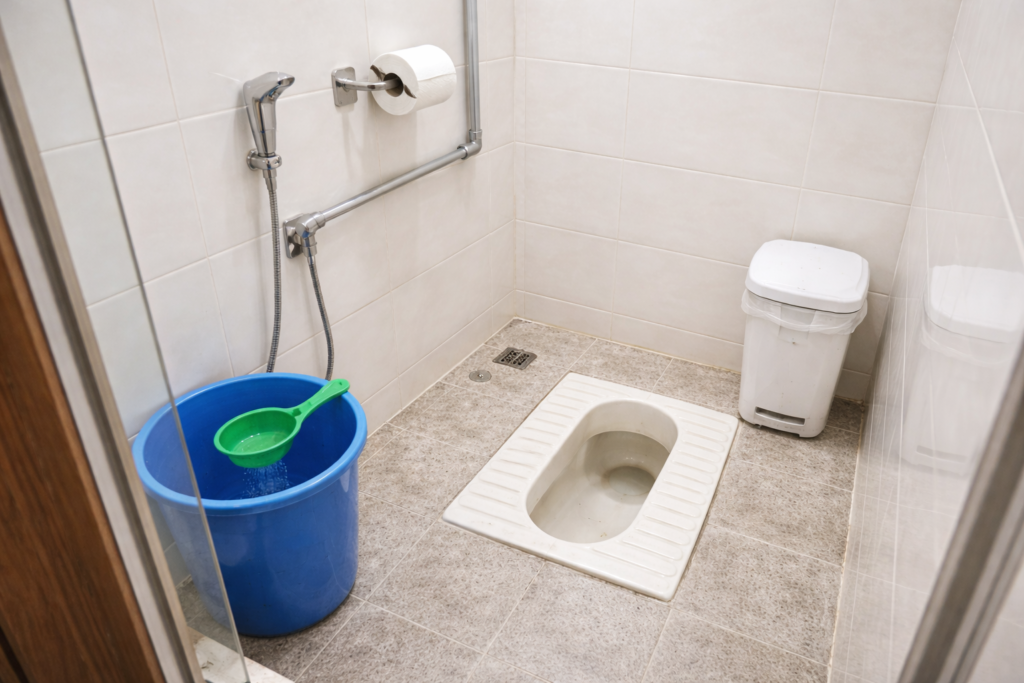
Knowing how to use asian toilets saves you from awkward mistakes in countries where squat-style fixtures are the norm. A squat toilet is a porcelain or ceramic pan set flush with the floor, and roughly 4 billion people worldwide use one daily. This guide breaks down the exact posture, cleaning routine, and etiquette so your first encounter goes smoothly. I’ve used squat toilets across six countries, and the learning curve is shorter than most people think.
What Is a Squat Toilet and Where Will You Find One?
A squat toilet is a type of toilet built into the ground rather than raised on a pedestal. You lower yourself into a squatting position over the pan instead of sitting. These fixtures are standard across large parts of Asia, including China, India, Indonesia, Thailand, Turkey, and parts of France. Rural areas favor them because the plumbing is simpler and cheaper to maintain. Dense cities keep them because they’re faster to clean between users in busy public restrooms.
The design dates back centuries. A hole in the ground with minimal plumbing required no running water, no moving parts, and no toilet seat to break. That practicality still holds in regions where floor-level fixtures make sense for cost and hygiene reasons. Sub-saharan African countries use similar designs, though the construction materials vary.
Quick Safety Checklist Before Using a Squat Toilet
Check the cubicle before you commit. Does it have a trash bin for used paper? Is there a bucket of water or a handheld sprayer for cleaning? Wet floors are common, so look for foot indents beside the squat and place your feet on them to avoid slipping.
Footwear matters. Bring a pair of flip flops reserved for restroom visits if you’re traveling through regions where public facilities see heavy traffic. Shoes that are hard to clean become a problem fast. Tuck hand sanitizer and a small tissue pack into your day bag. Some washrooms don’t stock soap, and a few don’t even have running water at the sink.
Step-by-Step: How to Use a Squat Toilet Properly
Here’s the process, broken into clear steps.
Step 1: Face the right direction. Stand facing the back wall of the cubicle. Your toes should point toward the rear of the pan. Most squat toilets have a hood or splash guard at one end, and that end faces you.
Step 2: Position your feet. Place one foot on each side of the pan, using the textured foot pads or indents beside the squat. Keep your feet flat on either side, roughly shoulder-width apart.
Step 3: Lower into a deep squat. Drop your hips straight down, keeping the balls of your feet stable and your heels on the ground if possible. Hug your knees lightly for balance. A traditional squat, sometimes called an asian squat, keeps your center of gravity low and steady. If your ankle flexibility is limited, lean forward slightly and brace your hands on your knees.
Step 4: Manage your clothing. Pull your pants down to your knees or ankles, and roll or clip loose fabric forward so nothing hangs near the front of the pan. This prevents splashes and keeps clothing clean.
Step 5: Do your business. The squatting position aligns your body so waste drops close to the hole at the back of the pan. If you need to pee, the posture naturally directs the stream downward. One mistake I see repeatedly: people try to hover instead of fully squatting. Full contact with the squat position is more stable and cleaner.
Step 6: Clean up. See the next section for cleaning details. After cleaning, stand up carefully, pull your clothing back into place, and rinse the pan if a mechanism exists. If it’s a pour-flush pan, pour water from the bucket into the bowl.
Cleaning Options: Wiping, Water, and Sprayers
Different bathrooms supply different tools. You’ll encounter three main setups.
Tissue or paper: If you’re using toilet paper, check whether signs say you can flush it. Many facilities in parts of Asia have plumbing that can’t handle paper, so you’ll use the trash bin instead. Don’t assume. Look for a garbage bin near the fixture first.
Water bucket or scoop: Scoop water with a cup and wash with water, then pour it into the pan to rinse. This method is common across South and Southeast Asia. Use your left hand for washing and your right for scooping. Fill the bucket again before you leave so the next person doesn’t find it empty.
Handheld sprayer (bidet sprayer): Aim the sprayer, squeeze the trigger, and clean. These work like a Japanese bidet attachment but require manual aim. Pat dry with tissue afterward if available.
After any method, wash your hands with soap thoroughly. Scrub for at least 20 seconds. If soap isn’t available, use an alcohol-based hand rub until you reach a proper sink.
Pour-Flush Pans vs. Western-Style Flush Toilets
Not every squat fixture works the same way. A pour-flush pan relies on you pouring a bucket of water to create a water seal that pushes waste through the drain and blocks odors. No handle, no automatic mechanism. A western toilet or western-style unit uses a tank and lever. Some hybrid models give you both a squat pan and a raised seat on the same fixture, which lets you pick your preferred position.
Dry or composting designs exist in very remote rural areas. These rely on covers and venting rather than water. The key rule: look before you act. If there’s no handle, there should be a water container nearby. Use it.
Hygiene and Practical Tips for Public Facilities
Public restrooms range from spotless to grim. Wearing shoes protects your feet from contaminated floors, but many travelers keep a dedicated pair of flip flops just for washroom stops. If a cubicle looks unsafe, find another stall.
Your post-use routine should be automatic. Rinse, apply soap, scrub for 20 seconds, and dry. That protects you and every other user who touches the same door handle. If running water is unavailable, clean your hands with alcohol-based hand rub and wash properly at the next opportunity.
Pack a small travel hygiene kit: tissues, sanitizer, and a zip-seal bag for used paper when no garbage bin is available. These three items remove 90% of the stress from using unfamiliar facilities.
Common Mistakes and How to Avoid Them
Treating a squat pan like a western-style seat is the biggest error. Don’t sit on porcelain surfaces designed for squatting; they can crack under concentrated weight. Standing on the rim is equally risky.
Flushing paper when the sign says not to clogs drains and creates problems for the next user. If you don’t have tissue, use the water and scoop method. Carry a small pack as backup.
Forgetting to check for supplies before committing is another common mistake. Scope out the cubicle first: water, paper, bin. If two of three are missing, you need your travel kit. One more tip: don’t lock yourself into a stall with a broken lock. Some public facility doors in busy areas have no lock at all, so a travel companion standing watch is handy.
Health Benefits: Squatting vs. Sitting on a Toilet
Research from the National Institutes of Health suggests the squatting position straightens the rectal canal, which may help with more complete bowel evacuation. The angle reduces straining. For people dealing with constipation or hemorrhoids, the posture can make a noticeable difference.
That said, not everyone can hold a deep squat comfortably. Knee injuries, hip replacements, and pregnancy all make squatting difficult or unsafe. If you can’t manage the position, look for accessible stalls with a raised seat. Many airports and train stations in asian countries now offer both squat and sitting options side by side.
Etiquette for Shared Spaces with Squat Toilets
Shared home facilities are common in apartment buildings across parts of Asia. Small habits make a big difference.
Refill the Water
If you use water to clean from the bucket, fill it again before you leave. Walking in to find an empty bucket is frustrating for the next person.
Leave the Floor Dry
Splashing happens. Take 10 seconds to rinse around the pan and dry the foot area. It’s faster than mopping up someone else’s mess.
Paper Goes in the Bin
If the plumbing can’t handle paper, use the garbage bin. Every time. Different regions have different standards for what pipes can handle, so follow the local rule.
Return Shared Tools
Put the scoop, bucket, or sprayer back in its spot. Consistency reduces contact with shared surfaces and keeps the space orderly.
Be Quick During Peak Hours
Mornings get crowded. Handle your business first, do grooming outside, and save your phone scrolling for later.
Travel Packing List for Squat Toilet Countries
Going beyond basic tissues and sanitizer: pack a collapsible water bottle or cup for areas where the only rinse option is manual. A sarong or quick-dry towel doubles as a privacy screen in open-air facilities. Waterproof sandals beat flip flops in washrooms with standing water.
For longer trips through Southeast Asia or India, consider a portable bidet bottle. They cost under $10, weigh nothing, and eliminate the awkward scooping technique entirely. After a few uses, you’ll wonder why you ever relied on dry paper alone.
Frequently Asked Questions
How do you use an Asian toilet?
Face the back wall, place one foot on each side of the toilet pan, and lower into a full squat. Keep your feet flat on the foot indents beside the squat toilet for stability. After use, clean with water or paper depending on what the restroom provides, then wash your hands.
Do you need to wipe with a squat toilet?
Not always. Many facilities in Asia provide water for cleaning instead of dry paper. A bucket and scoop or a handheld bidet sprayer replaces wiping. If you prefer tissue, carry your own and check whether you can flush it or need to use the trash bin.
What is the etiquette for Asian bathrooms?
Refill any water bucket you use, leave the floor dry, and put used paper in the designated bin. Remove your shoes if shared slippers are provided. Scrub up thoroughly with soap afterward. In shared facilities, be quick and tidy so the next person walks into a clean space.
What countries use squat toilets?
Squat toilets are common in China, India, Indonesia, Thailand, Turkey, France, and many countries across parts of Asia, the Middle East, and sub-saharan African regions. Japan has both squat and high-tech models depending on the facility. Even some European nations still have squat-style fixtures in older buildings and rest stops.
Whether you’re facing a squat fixture in a rural Thai village or a busy train station in China, the technique stays the same. Practice the squat position at home a few times, pack your travel kit, and you’ll handle any setup with confidence. Knowing how to use asian toilets turns a potential travel headache into a non-issue.