
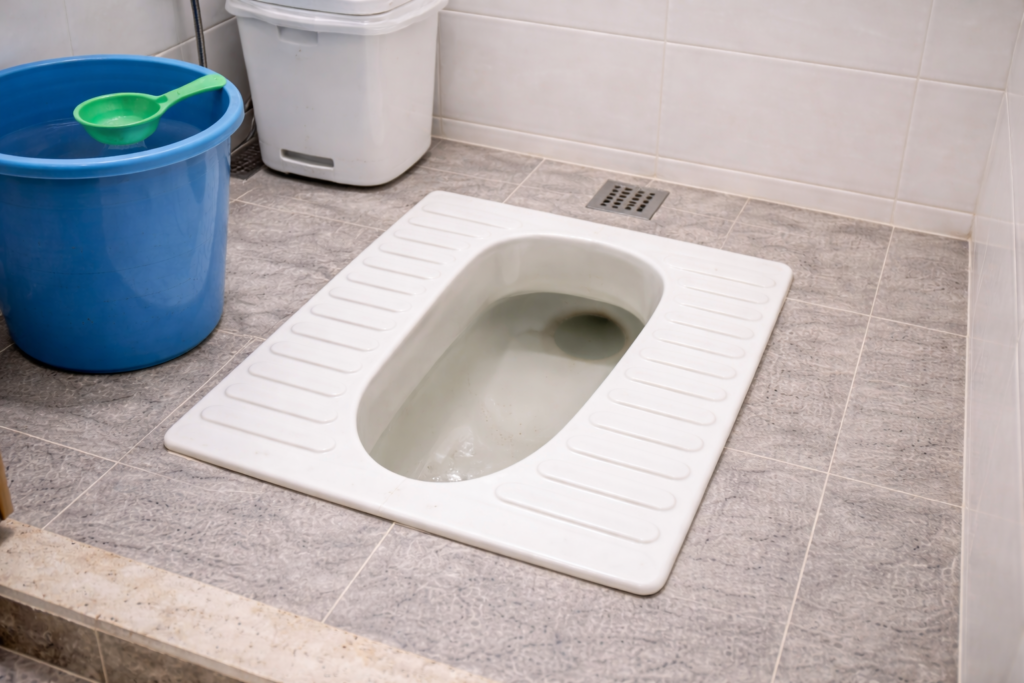
A squat toilet is a floor-level fixture you use in a crouching position rather than sitting on a raised seat. Found across Asia, North Africa, and parts of Europe, this style of bathroom fixture has been around for centuries. If you’ve spotted one in a public restroom and weren’t sure what to do, this guide covers what a squat toilet is, how it works, where you’ll find them, and how to use Asian toilets with confidence.
What Is a Squat Toilet and How Does It Work?
A squat toilet is a unit mounted level with the ground. Instead of a raised bowl and seat, you position yourself over an opening in the floor. Most models feature a porcelain basin with textured foot pads on either side. Some operate as a flush toilet with a water seal connecting to standard plumbing, while simpler versions drain into a pit below.
The waste-clearing mechanism varies. Higher-end units include a built-in water release. Others rely on a bucket of water poured directly into the basin after use. Gravity moves waste through a drain pipe beneath the floor.
How a Squat Toilet Differs from a Western Toilet
The main difference is posture. A western toilet (sometimes called a western-style fixture) requires you to sit. A floor-level unit requires a deep crouch with both feet planted.
Seated models use a raised bowl with a hinged cover. Floor-level models have no movable parts above the surface. The choice between them depends on regional infrastructure, cultural preference, and the available plumbing setup in the bathroom.
How to Use a Squat Toilet Correctly
Face the Right Direction
Stand facing the back wall, where the drain opening is deepest. This is the hole at the back. Facing the front increases splashing.
Position Your Feet on the Pads
Place one foot on each side of the basin. Use the foot indents beside the unit for stability. Keep your feet flat and shoulder-width apart.
Lower into a Stable Crouch
Bend your knees and sink down slowly. Your weight should stay centered over the opening. If balance feels difficult, press your hands against your knees for support.
Aim and Stay Balanced
For urination, direct the stream straight down. Peeing straight down the hole prevents splatter. Keep your torso upright and avoid leaning in any direction while you defecate or urinate.
Clean Up Afterward
After finishing, wipe with toilet paper if it’s available. In some restrooms, a spray hose lets you rinse with water for cleanup. Check whether a trash bin is provided for used paper, because many drain systems can’t handle it. Use the flush handle or pour water into the basin from a nearby bucket to clear waste.
Always clean your hands afterward. If soap isn’t available, carry hand sanitizer. Wet wipes are useful backup at airports or remote locations.
Is a Squat Toilet Hygienic?
Hygiene depends on maintenance, not the fixture itself. Because you don’t contact a shared surface, there are fewer touchpoints compared to a seated model. No shared seat means reduced surface exposure in high-traffic public restrooms.
That said, a poorly maintained unit in a busy bathroom can be just as unsanitary as any other fixture. The difference comes down to cleaning frequency and user behavior, not the design. In my experience, the cleanest ones tend to be in hotels and newer airports rather than older bus stations.
Where Are Squat Toilets Common?
The prevalence of squat toilets is highest across parts of Asia, including Indonesia, Thailand, China, Malaysia, Japan, and Nepal. They remain standard in many public bathrooms across these regions.
You’ll also encounter them throughout North Africa and several Sub-Saharan African countries. Parts of the Middle East, Turkey, and the Balkans use them routinely. Even some European countries like France, Italy, and Greece still have them in older train stations.
Urban centers often offer both options. Rural areas and the developing world tend to rely on floor-level models exclusively.
Why Some People Prefer Squatting Instead of Sitting
Squatting straightens the anorectal angle, which can make defecation easier. A crouching posture engages the leg muscles and pelvic floor differently than sitting does, and some research links the squatting position to reduced straining and lower risk of hemorrhoids over time. Comfort, mobility, and personal health all factor into which posture works best.
Types of Squat Toilets You’ll Encounter
Not every floor-level fixture looks the same. The most common variations include glazed ceramic pans connected to municipal plumbing, manual pour-rinse basins popular in Southeast Asia, basic pit-style units (a hole in the ground with a concrete surround), and pedal-operated models found in parts of China, Korea, and Japan.
Some Japanese facilities pair a floor-level option with a bidet and dryer in the same restroom, giving visitors a choice between traditional and high-tech.
Common Mistakes First-Time Users Make
Facing the wrong direction ranks first. Always face the back.
Standing too close or too far from the basin causes missed aim. Center yourself using the foot pads as guides. Another frequent error: wearing the wrong footwear. A pair of flip flops with grip work far better than smooth-soled shoes on wet tile.
Using toilet paper without checking disposal rules creates clogs. When you’re using toilet paper, confirm whether it goes in the bin or the basin. If you don’t want to use this type of fixture due to balance concerns or mobility issues, look for a western-style option at the same location.
Practical Infrastructure Behind the Design
Floor-level fixtures work with minimal water pressure and basic drain systems. That’s why they’re common in some Asian and African regions where plumbing infrastructure is limited. A gravity drain and occasional pour-rinse keep everything functional.
Installing a seated model requires reinforced subflooring, a pressurized water supply, and precise waste pipe alignment. In many regions, those conditions aren’t available. The design adapts to local conditions rather than forcing a single standard.
Frequently Asked Questions
What is the purpose of a squat toilet?
It provides a low-cost, durable fixture that works with minimal plumbing and water pressure. The crouching posture also aligns the body in a way some users find more natural for elimination.
Do you remove clothing to use one?
No. Pull trousers or a skirt above knee level and hold them in place. Loose clothing can be tucked or rolled to keep it clear of the basin.
What are the disadvantages?
People with knee injuries, hip problems, or limited mobility may find the crouching position difficult. Wet floors around public units also create a slip risk without proper footwear.
How do you wipe at one?
Use toilet paper if it’s available, or use a water hose attached to the wall. In some regions, users clean with water and their left hand, then wash with soap immediately after.
Once you understand what a squat toilet is and how the mechanics work, the process becomes straightforward. Whether you’re at an airport in Asia, a rest stop in Southern Europe, or a rural guesthouse, knowing what to expect removes the guesswork entirely.